

Last updated: September 2026 – checked against the current eChallan Parivahan payment options.
Once you’ve found a pending challan, paying it is usually quick, but the right steps and payment options depend on how far along the challan is. This guide focuses specifically on the payment methods available, both online and offline, what affects the amount you owe, and what to do after paying. For how to search for and check a challan in the first place, see our e-challan status guide.
Why Your Challan Amount Varies
Before paying, it’s worth understanding why the amount shown might be different from what you expected. Fine amounts are set under the Motor Vehicles Act and can differ by state, since states can notify their own amounts up to the central maximum. A repeat offence for the same violation may carry a higher fine than a first offence in some states. If your challan has been forwarded to a Virtual Court, the amount there can sometimes differ slightly from the original notice, since court fees or processing charges may apply. If a figure looks unusually high or doesn’t match the violation described, check our traffic fines list for the standard range, and raise a query with the issuing authority if something still looks wrong before paying.
Paying an E-Challan Online

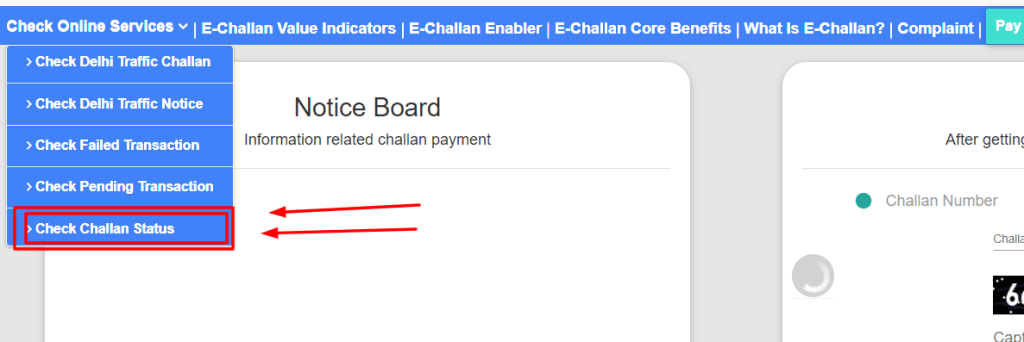
You can also pay through the mParivahan app using the same details, or through your state’s own challan portal where one exists (for example Maharashtra’s mahatrafficechallan.gov.in), since state portals and the national portal draw from the same underlying record.
Paying a Challan Sent to Virtual Court
If a challan isn’t paid within the usual window, it’s often forwarded to a Virtual Court (vcourts.gov.in), which handles minor traffic offences online without requiring a physical court appearance. If your challan status shows it’s gone to Virtual Court, you’ll need to pay it there instead of through the standard eChallan portal; the site accepts similar online payment methods and shows the case status once resolved.
Paying a Challan Offline

You can also pay in person at the traffic police station or court handling the challan, using cash, UPI, or a card, depending on what the office accepts. Carry the challan number or a copy of the challan notice, along with your ID and vehicle documents. Ask for a receipt and keep it, since it’s your only proof of payment if a dispute comes up later.
Common Mistakes to Avoid When Paying
After You Pay
Why It’s Worth Not Delaying Payment
Unpaid challans can affect services like RC renewal, ownership transfer, and a NOC for moving the vehicle to another state, since these checks look for pending fines against the vehicle. Left unpaid long enough, a challan can also be escalated to a Virtual Court case, which takes more effort to resolve than a simple online payment. If you’re buying a used vehicle, checking for pending challans before finalising the purchase saves you from inheriting a stranger’s unpaid fines. See our traffic fines list for current penalty amounts by offence.
Frequently Asked Questions
Can I pay a challan without knowing the exact challan number?
Yes, searching by vehicle registration number shows all pending challans linked to that vehicle, so you don’t need the challan number specifically.
What payment methods are accepted?
UPI, net banking, and debit or credit cards for online payment; cash, UPI, or card at a police station or court for offline payment, depending on what the specific office accepts.
What should I do if my payment fails but money was deducted?
Wait a day for the status to update, since bank-side confirmations can lag. If it still shows unpaid, contact your bank with the transaction reference, and separately reach out to the eChallan helpdesk or your state’s challan portal.
Why has my challan moved to Virtual Court?
Challans that go unpaid past the standard window, or certain offence types, are routed to a Virtual Court for online adjudication. Check vcourts.gov.in to pay or contest it there.
Can I pay someone else’s challan for them?
Yes, since the payment portal only needs the challan or vehicle number, not proof that you’re the registered owner. This is commonly done, for example, when a family member handles the payment.
Related guides: E-Challan Parivahan (Check Status), Traffic Fines List, Maharashtra Vehicle Challan.